
The operation had outgrown the way it was being presented.
The inherited site no longer reflected the scale, technical depth or wider role of the manufacturing organisation. Recruitment was becoming more important, expansion increased the need for external credibility, and prospective investors were being encouraged to visit the factory in person. The website needed to make that visit more compelling before they arrived and more intelligible once they had.
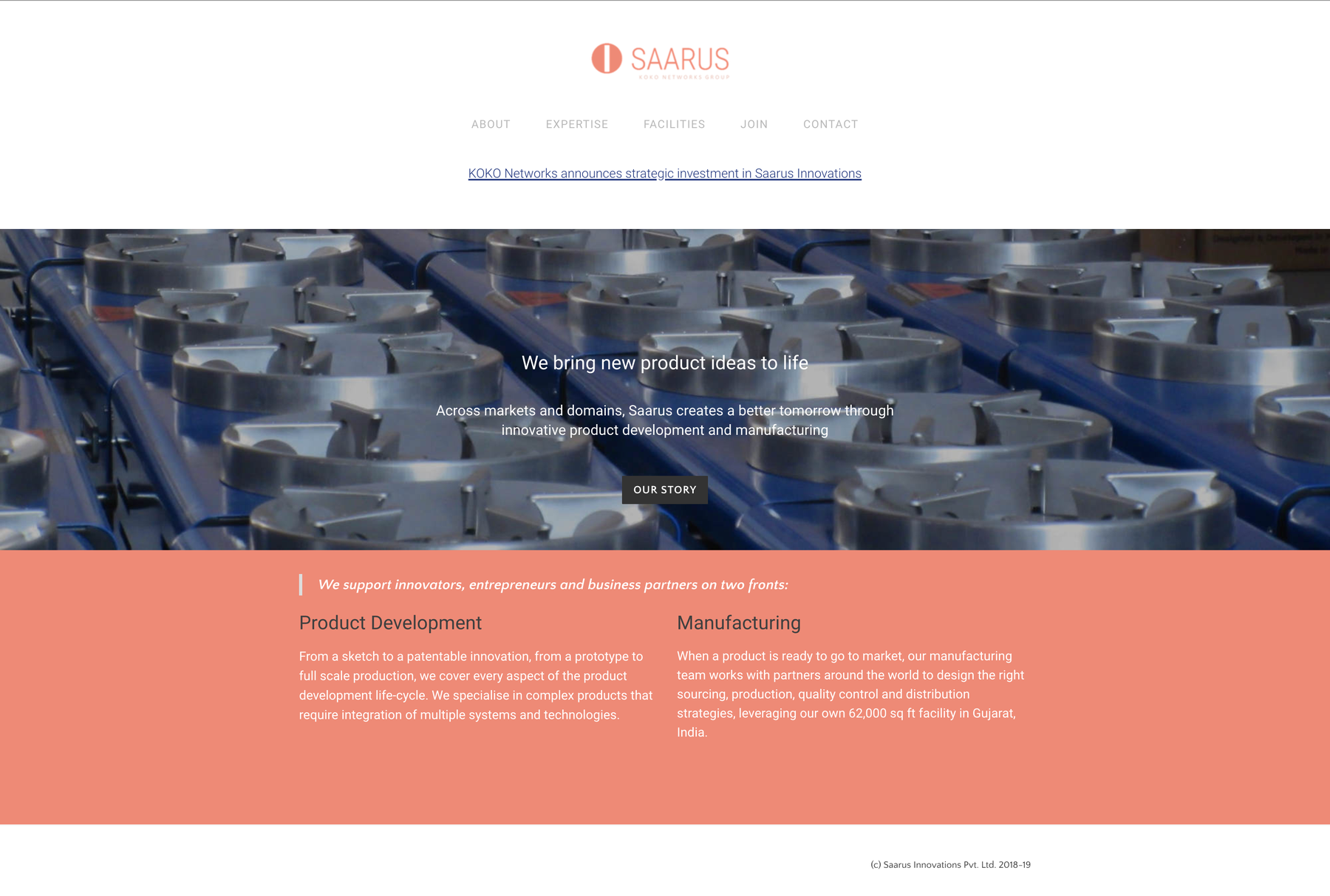
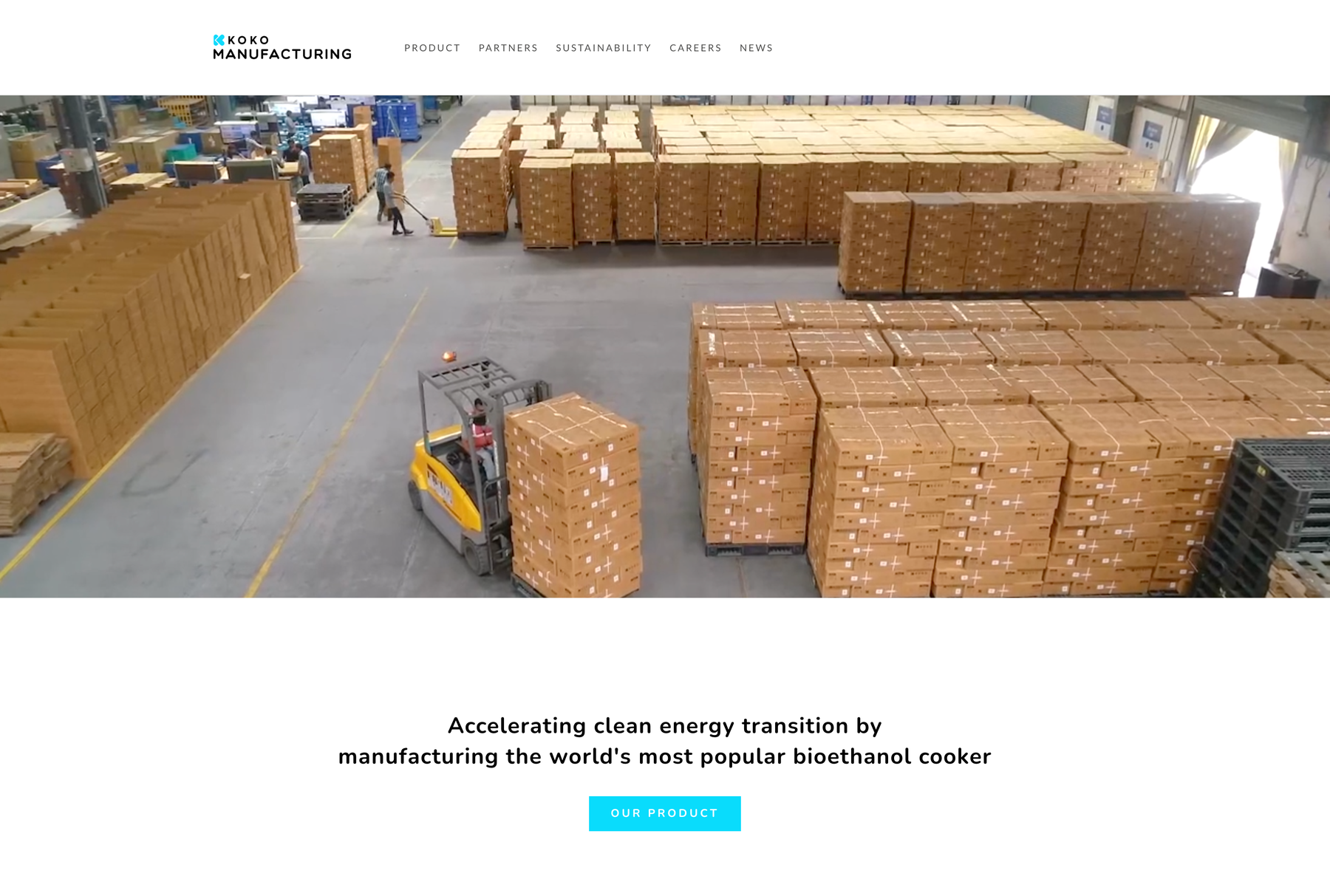
The inherited site still presented the operation primarily through the Saarus identity and its earlier product-development story. The rebuild had to make the operation legible as KOKO Manufacturing, broader in audience, deeper in manufacturing proof and clearly part of the parent brand.
Recruitment needed a stronger destination
Prospective employees needed to understand the mission, workplace and role of the India operation.
Technical depth was underrepresented
The capability was visible, but the factory, tooling, processes and quality systems were not being shown with enough depth.
Investor visits needed a stronger prelude
Prospective investors were being encouraged to visit the factory; the site needed to establish credibility before they arrived.
The identity still belonged to the past
The inherited Saarus presence did not yet read as a coherent part of KOKO’s brand and wider story.
The site had to feel technically credible without becoming difficult to understand.
The work started with the operation, then moved into public expression.
The site was built from first-hand understanding of the factory, not from generic manufacturing claims.
Understand the operation
What was distinctive, credible and important enough to make public?
What I didI toured the factory, interviewed manufacturing leaders and technical teams, and reviewed existing material to understand the product, production processes, quality systems, sustainability practices and people story.
Why it matteredThe website started from real operating capability rather than generic manufacturing language.
Define the public narrative
What should each audience understand before deciding whether to engage?
What I didI set the site architecture and narrative hierarchy around design, manufacturing, quality, partners, sustainability, careers and news, with the wider KOKO story providing context and investor visits treated as a deliberate external use case.
Why it matteredCandidates, partners and prospective investors could enter through different questions while still seeing one coherent operation.
Translate technical depth without diluting it
How could the site satisfy technical readers without losing everyone else?
What I didI wrote the site copy, translated specialist inputs, designed the pages and created the photography and employee-video briefs so that technical language appeared where it added credibility, with plain-language explanation around it.
Why it matteredSpecialists could recognise the substance, while non-technical visitors could still understand why it mattered.
Build, launch and govern
How would the site stay coherent after launch?
What I didI built the site, directed the photography and video production, completed QA and go-live, and established the content governance needed for later updates.
Why it matteredKOKO Manufacturing had a usable public platform rather than a one-off communications asset.
Manufacturing leadership set the business need; I owned the website.
I led the strategy, architecture, narrative, technical interviews, writing, editing, visual design, photography and employee-video direction, site build, QA, launch and content governance. The Manufacturing leader was the primary decision-maker, with founders, board members and other senior leaders reviewing the wider organisational story and its use with external stakeholders and prospective investors.
Manufacturing leader
Set the business priorities, validated the manufacturing story and approved the final direction.
Founders / Board / Senior leadership
Reviewed the wider KOKO narrative, organisational context and external positioning.
Manufacturing / Technical teams
Provided the operational detail needed to represent the factory accurately.
The finished site should now do more of the proving.
The existing diagrams still explain the judgement. The new screenshots show that the judgement made it into a real public product.
One operation, several reasons to engage
The architecture gave candidates, partners and prospective investors different routes into the same underlying manufacturing story.
Why work here?
Mission, culture, people and careers.
Can this operation scale reliably?
Manufacturing capability, quality and partner ecosystem.
What would we be coming to see?
Manufacturing depth, product, quality, operating capability and scale.
Manufacturing depth became inspectable.
The production page did not rely on generic claims about capability. It showed the factory and named the processes, then used concise explanations to make the significance understandable beyond an engineering audience.
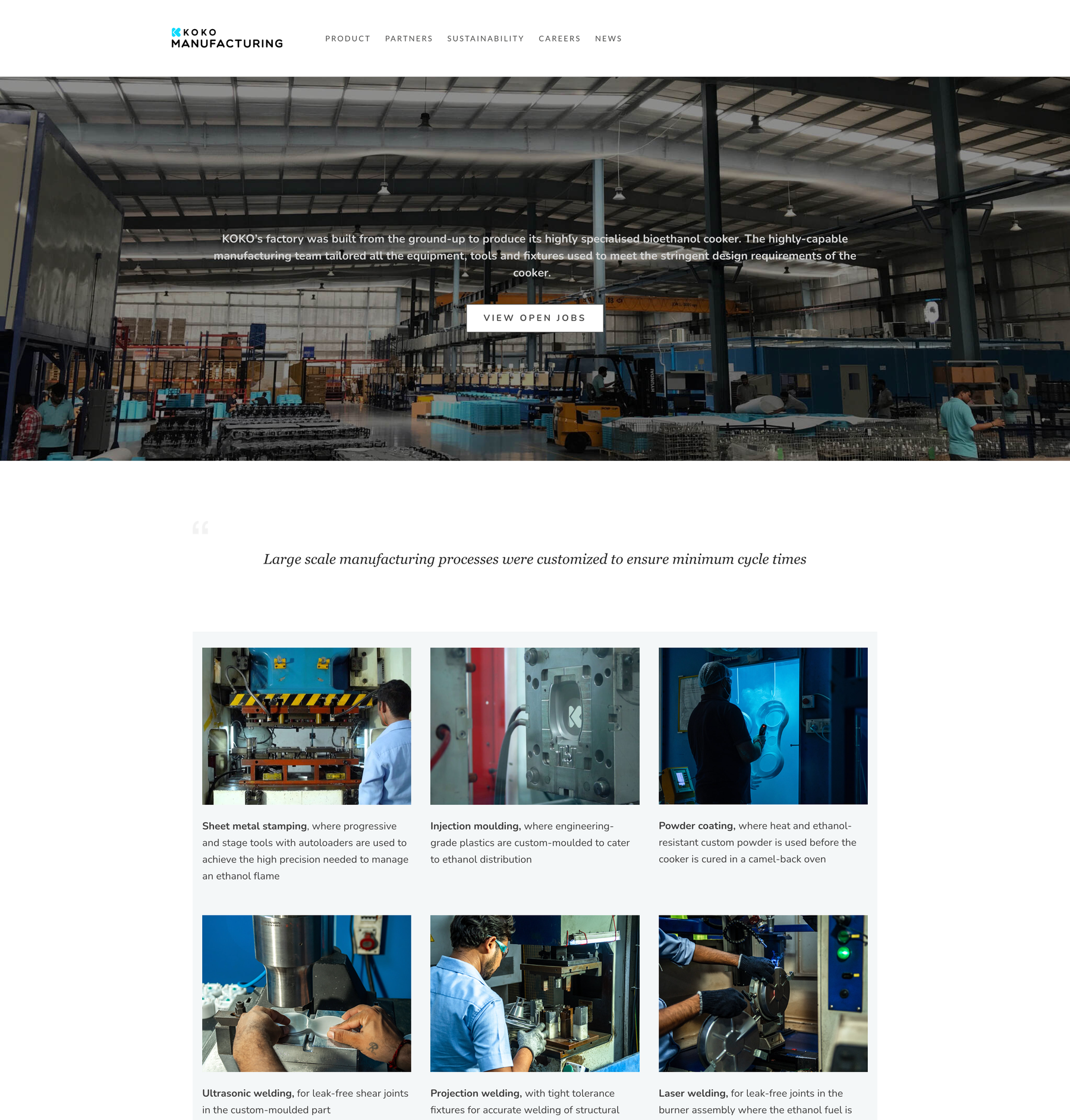
Specific enough to earn technical credibility; structured enough to remain readable.
Processes such as stamping, injection moulding, powder coating and welding remain explicit. The surrounding copy explains why those capabilities matter, rather than replacing the terminology with vague marketing language.
Quality claims were backed by systems and examples.
The site could state the certification, testing and safety practices directly, while explaining what those controls meant for production quality and operating discipline.
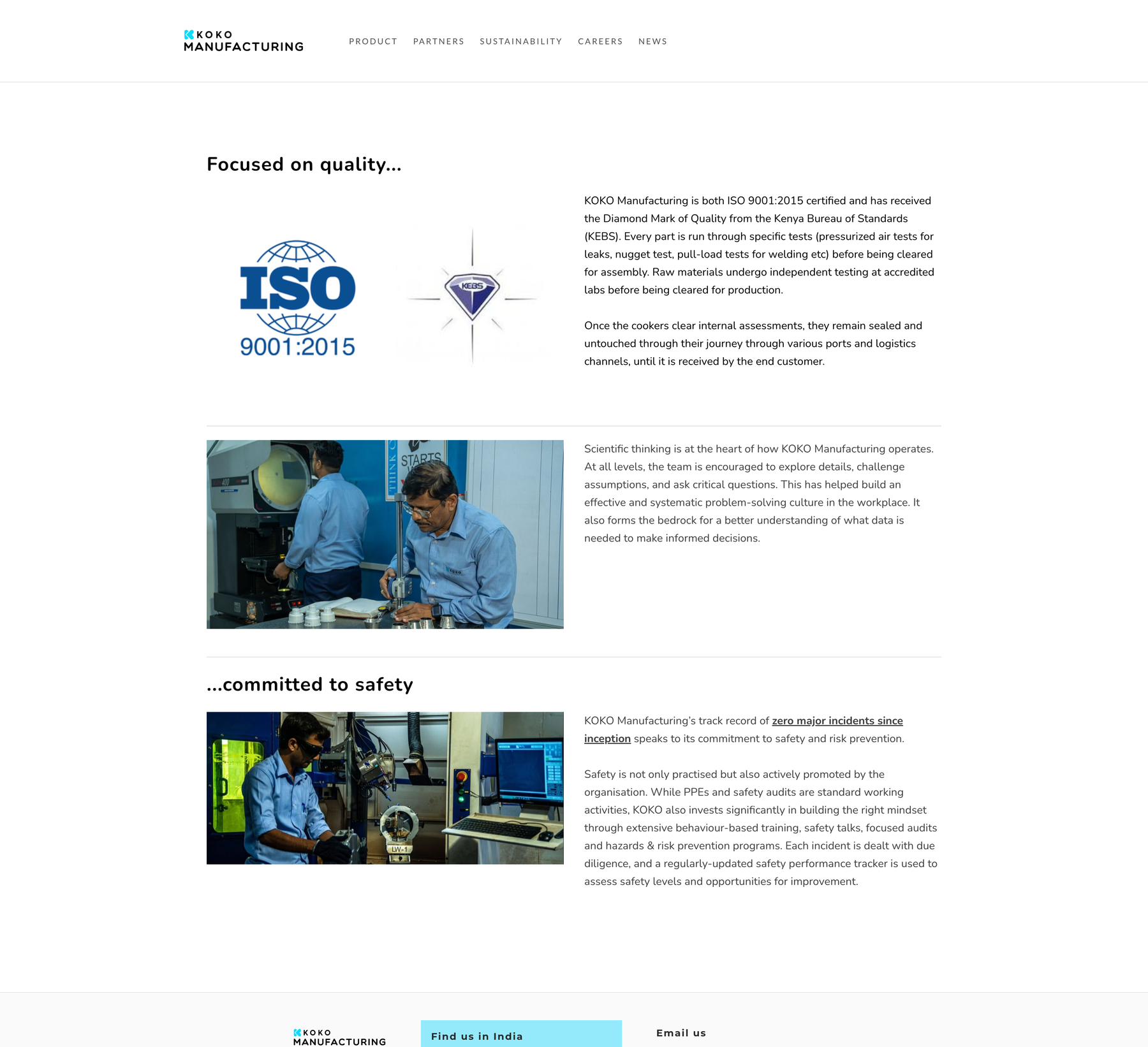
Translate the consequence, not the terminology away.
ISO certification, testing procedures and safety language remain visible because they are part of the proof. Plain-language explanation around them gives a wider audience the context needed to understand their relevance.
Recruitment was treated as a real audience need, not a footer link.
Prospective employees were a primary audience. The Careers page gave the operation a recruitment destination of its own, combining the employer proposition, practical application guidance, development and inclusion content, and employee voices.
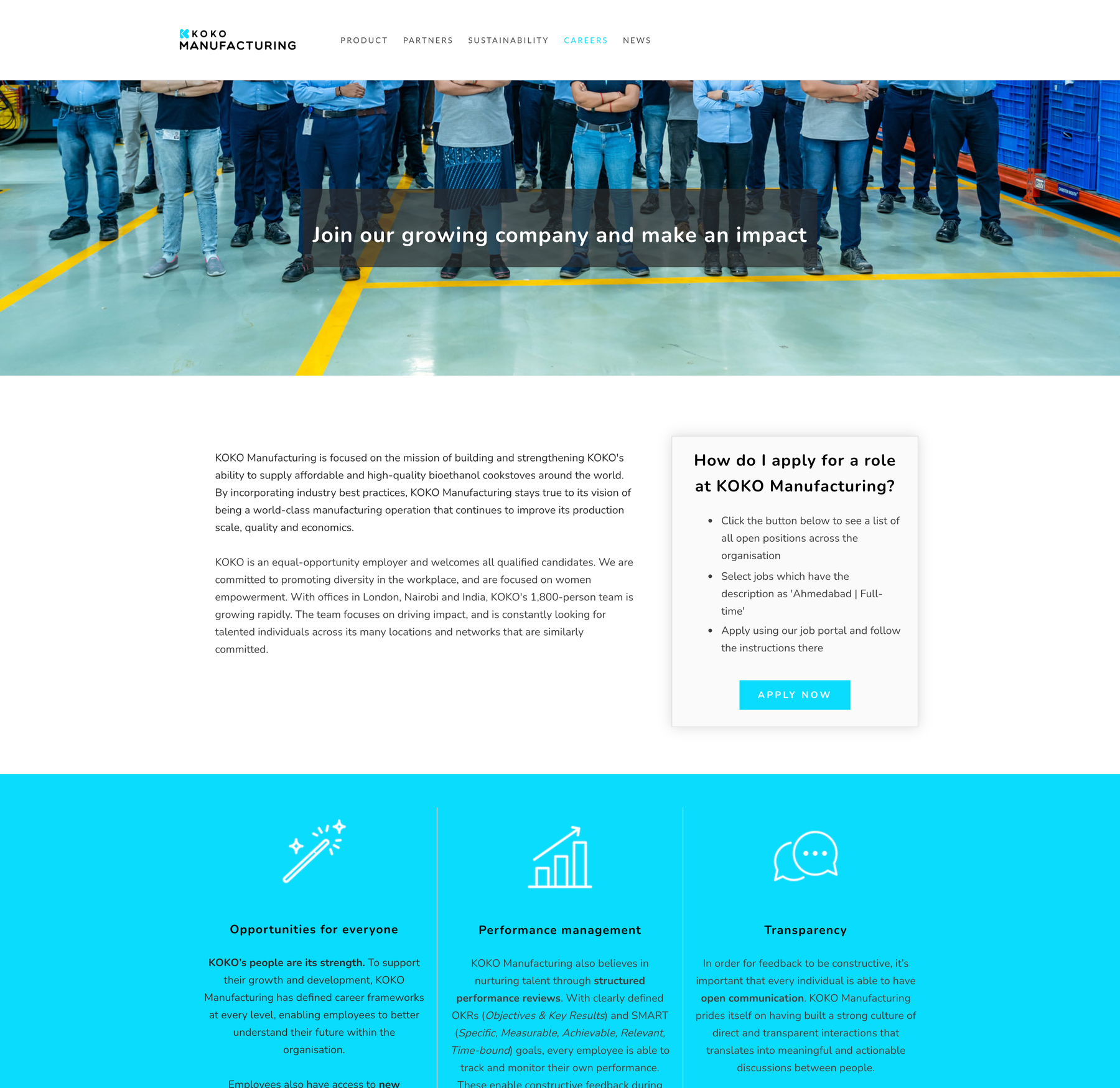
The careers story had to make the factory feel like a place to join, not just a place that produced things.
The page translates the wider manufacturing narrative into employee terms: purpose, opportunity, performance, transparency, development and inclusion.
What changed once the site was live.
The manufacturing organisation had one coherent public presence that could show the operation, explain its depth and give different audiences a credible place to begin.